Introducing UZB ATTARTIL QI GPT: A Qur'anic Language, Tafsir and Tadabbur Assistant
Learning the Qur'an raises questions at odd hours.
You are revising a verse late at night. A word looks familiar, but you cannot recall its root. You remember your ustaz explaining a grammatical point in class, but the note in your book is incomplete.
Until now, the only option was to wait until the next lesson.
Today, we are announcing something to help fill that gap between classes: UZB ATTARTIL QI GPT, a custom AI assistant built under AtTartil Qur'anic Institute.
What Is UZB ATTARTIL QI GPT?
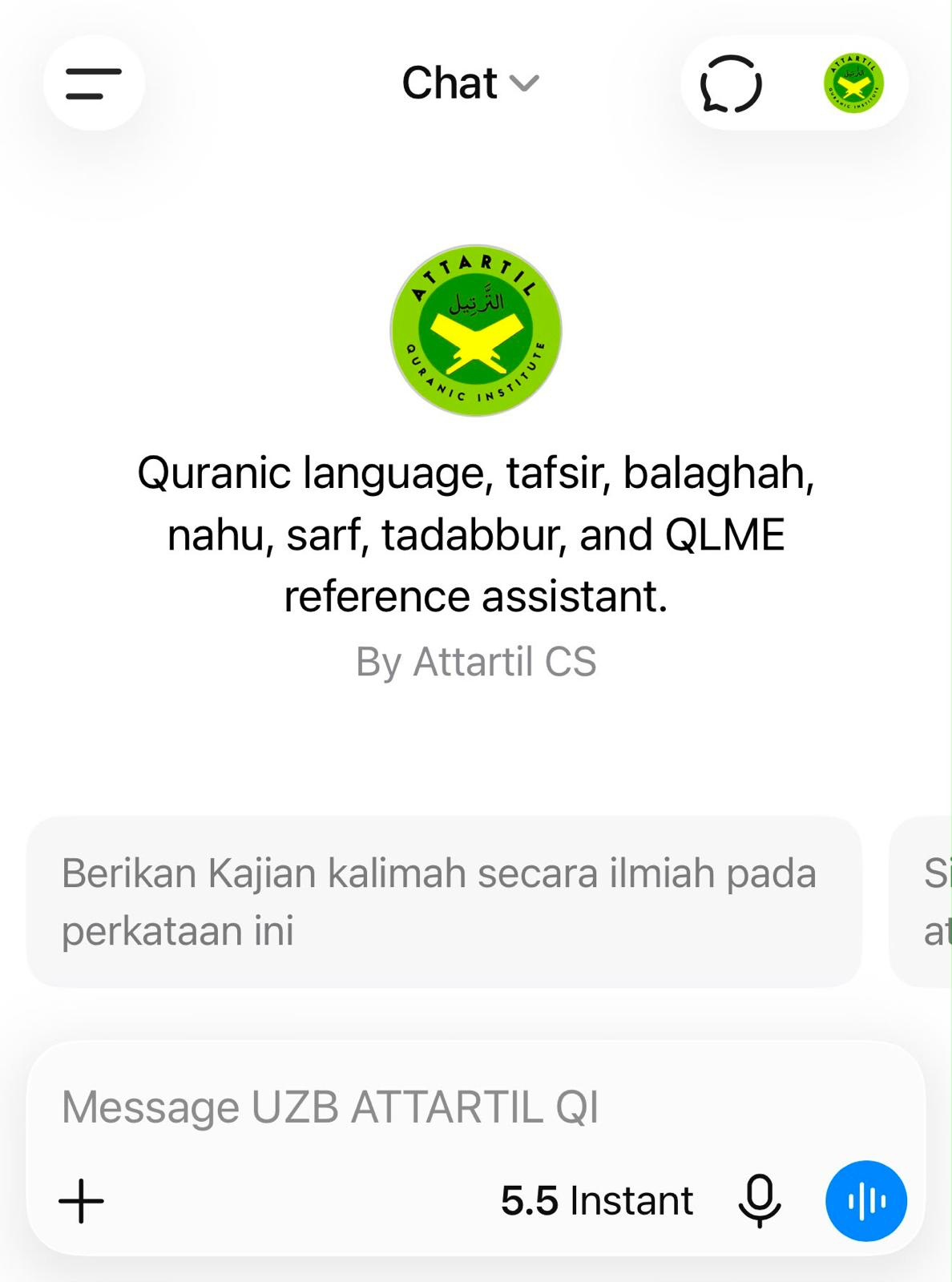
UZB ATTARTIL QI GPT is a custom GPT — an AI chat assistant configured specifically for Qur'anic study, in both English and Bahasa Melayu.
It is designed as a study companion, not a fatwa service and not a substitute for a teacher.
You can ask it to help you with:
- Qur'anic language (lughah) — vocabulary, roots, word families, and shades of meaning
- Tafsir — the general meaning of verses, context, and classical explanations
- Balaghah — rhetorical beauty, emphasis, imagery, and why a verse is worded the way it is
- Nahu (syntax) — i'rab, sentence structure, and grammatical function
- Saraf (morphology) — verb forms, patterns, and derivations
- Tadabbur — reflective prompts that connect a verse to daily life
- QLME reference assistance — revision support for students following our QLME curriculum
The assistant is intentionally scoped. It stays close to Qur'anic sciences instead of trying to be a general-purpose chatbot.
Why We Built It
At AtTartil Qur'anic Institute, we have taught more than twenty-two batches of QLME students. One pattern repeats in almost every batch.
Students learn well in class. The difficulty is the week between classes.
Notes go cold. Momentum drops. A small question — one that would take an ustaz thirty seconds to answer — sits unanswered for seven days.
UZB ATTARTIL QI GPT exists for those thirty-second questions.
It helps a student:
- Re-check a word they half-remember
- Break down a sentence they are struggling to parse
- Generate practice questions before revision
- Sit with a verse for reflection when a teacher is not available
The classroom remains the centre of learning. The assistant simply keeps the learner engaged in between.
How to Use It Well
AI is a tool. Like any tool, the outcome depends on how it is used.
Ask specific questions
Instead of "explain Surah Al-'Asr", try:
"Give a scholarly word study (kajian kalimah) of the word khusr in Surah Al-'Asr, including its root, morphological pattern, and how classical mufassirun explained it."
Specific questions produce far more useful answers.
Use it to prepare, not to replace
Bring the answer back to your ustaz. Ask whether the explanation is accurate, and what nuance was missed. That conversation is where real learning happens.
Verify anything you intend to act on
This is the point we take most seriously.
A Deliberate Word of Caution
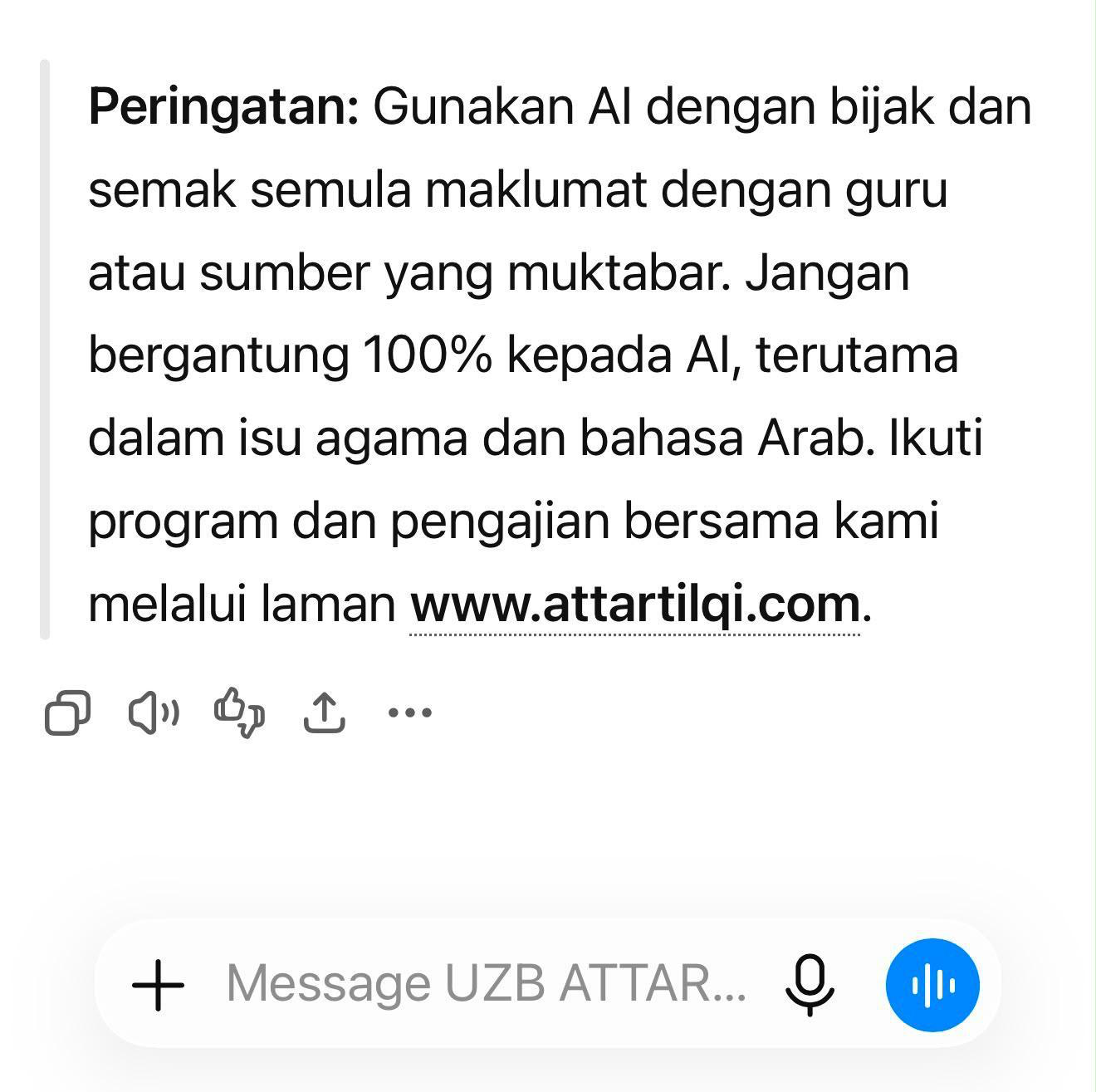
Every response from UZB ATTARTIL QI GPT ends with a reminder, in Bahasa Melayu:
Peringatan: Gunakan AI dengan bijak dan semak semula maklumat dengan guru atau sumber yang muktabar. Jangan bergantung 100% kepada AI, terutama dalam isu agama dan bahasa Arab.
(Reminder: Use AI wisely and re-check information with a teacher or an authoritative source. Do not depend 100% on AI, especially in matters of religion and the Arabic language.)
We include this by design.
AI language models can produce fluent text that is confidently wrong. In Qur'anic sciences, a plausible-sounding error is more dangerous than an obvious one — it can misattribute an opinion, misread an i'rab, or flatten a nuance that scholars debated for centuries.
Islamic knowledge has always been transmitted through teachers, chains of transmission, and accountable scholarship. That model is not outdated. It is the safeguard.
So the rule we give our own students is simple:
Use the assistant to explore. Use your teacher to confirm.
Who This Is For
UZB ATTARTIL QI GPT will be most useful for:
- QLME students revising between weekly sessions
- Adult learners who read the Qur'an but want to understand it
- Teachers preparing lesson material and drafting practice questions
- Anyone curious about why a verse is phrased the way it is
If you are starting from the beginning, the assistant is a supplement — not a starting point. Begin with a structured class, then let the tool support you.
Where This Fits in Our Work
Our mission has never been to make Qur'anic learning faster. It has been to make it transformative — to move learners from reading, to understanding, to reflecting, to living the Qur'an.
Technology does not change that mission. It only widens the door.
UZB ATTARTIL QI GPT is one more way we are trying to keep the Qur'an close to our students, in the hours when the classroom is closed.
Use it with discipline. Bring your questions back to your teachers. And keep learning.
Follow AtTartil QI for more on Qur'anic language, tafsir, and reflection — and join us for a structured programme at www.attartilqi.com.
Screenshots
Swipe to see more photos
Want to learn the language of the Qur'an properly?
Explore QLMERelated Articles
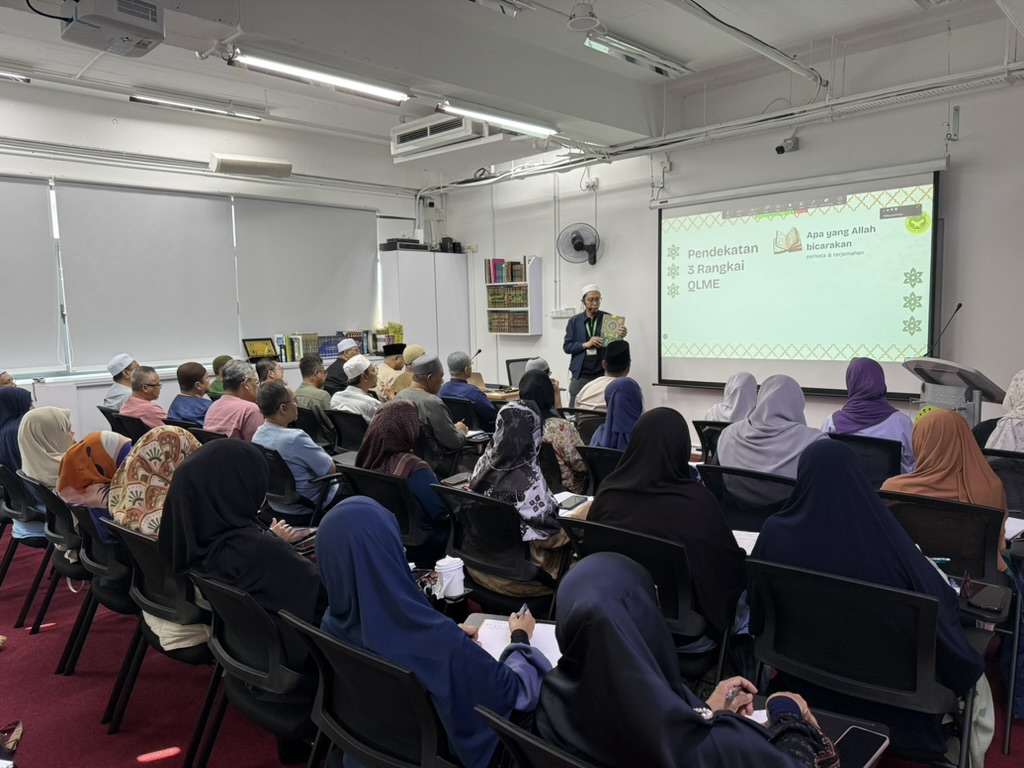
QLME 3.0 Batch 23 Begins: From Reading the Qur’an to Understanding Its Language
QLME 3.0 Batch 23 begins with a full house of physical and online learners, taking the next step from reading the Qur’an to understanding its language with sincerity and istiqamah.
Read More
QLME 3.0: The Evolution of Qur'anic Language Learning with Guided AI
A complete guide to QLME 3.0 — why Qur'anic language matters, how QLME evolved across three eras, what Guided AI really means, and the full learning framework from study to tadabbur to action.
Read More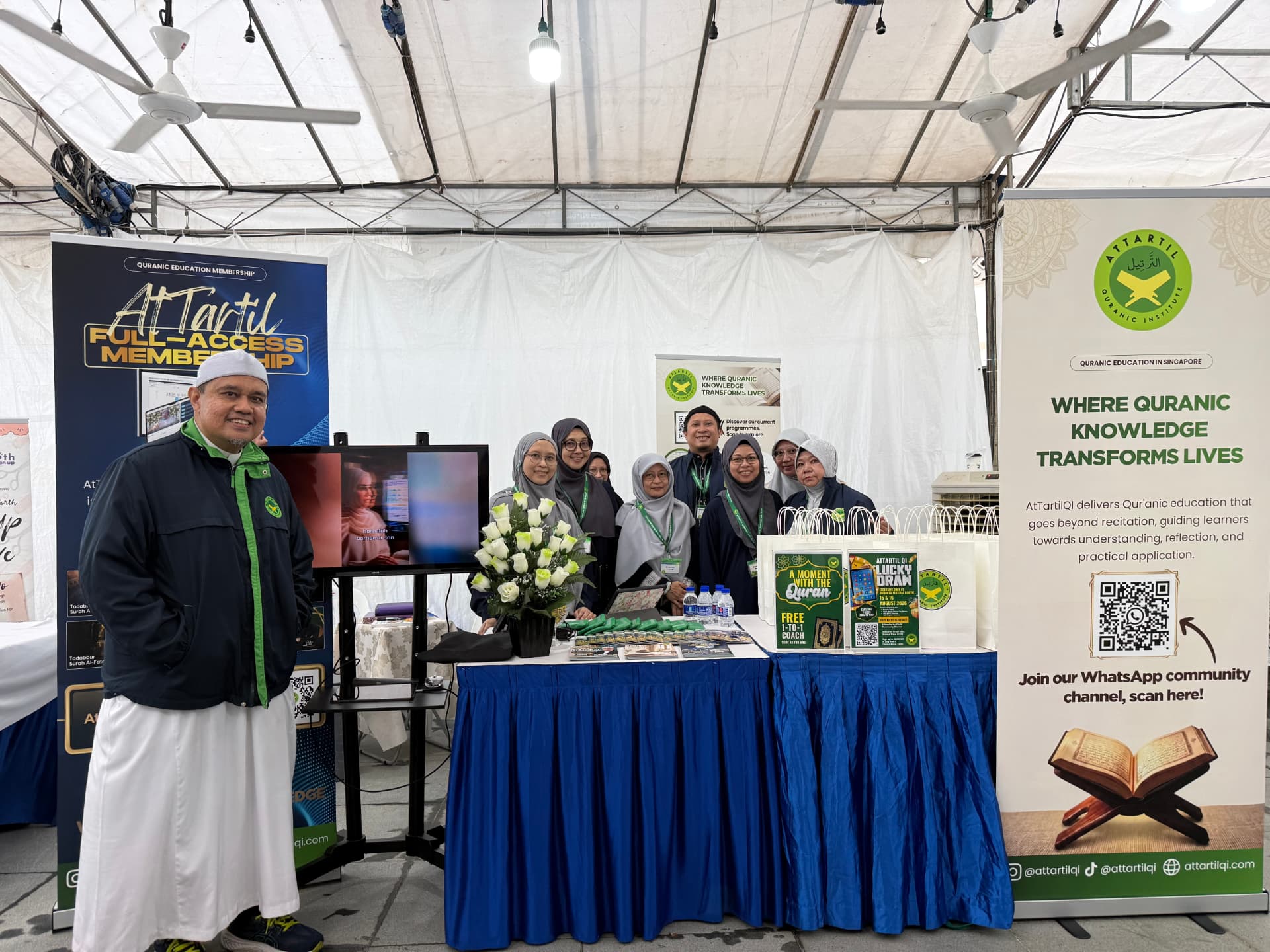
Two Days, One Mission: Bringing People Closer to the Qur'an
AtTartil QI spent two days at Quran Festival 2026 at Masjid Sultan Singapore, meeting visitors from Africa, France, the United States, Indonesia, Malaysia, and Japan, and welcoming more than 50 participants to 'A Moment With Al‑Quran'.
Read More