

Islamic Dream Interpretation: A Beginner's Guide from the Qur'an and Sunnah
Dreams have occupied the Muslim imagination since the earliest days of Islam. The Qur'an opens the story of Prophet Yusuf ﷺ with a dream, and the Prophet Muhammad ﷺ began to receive revelation through true dreams six months before the first verses of the Qur'an were revealed. Understanding how Islam approaches dreams — carefully, humbly, and without superstition — helps us relate to our own night visions with the balance the Prophet ﷺ taught.
This guide introduces the classical Islamic framework for dream interpretation (ta'bir al-ru'ya), drawing on the Qur'an, the Sunnah, and the tradition of scholars such as Muhammad Ibn Sirin (d. 110 AH), whose name is most closely associated with this science.
The Three Categories of Dreams
The Prophet ﷺ said: "Dreams are of three types: a good dream which is glad tidings from Allah, a dream from Shaytan which causes grief, and a dream from what a person preoccupies himself with." (Bukhari and Muslim)
Islamic scholars have consistently returned to this hadith as the foundation for any serious discussion of dreams:
- Ru'ya (a true dream) — a good vision from Allah, often carrying meaning, glad tidings, or gentle guidance. The Prophet ﷺ described these as "one of the forty-six parts of prophethood."
- Hulm (a disturbing dream) — comes from Shaytan and is meant to unsettle the believer. It carries no meaning and should not be dwelled upon.
- Hadith al-nafs (self-talk in sleep) — the mind replaying the day's concerns, conversations, and anxieties. This is not a message; it is simply the sleeping mind processing waking life.
Most dreams belong to the third category. Recognising this is the first act of humility in Islamic dream interpretation: not every vivid dream is a sign, and not every strange dream is from the unseen.
What the Qur'an Teaches Us About Dreams
Several prophets in the Qur'an received guidance through dreams. Prophet Yusuf ﷺ saw eleven stars, the sun, and the moon prostrating to him — a vision his father Ya'qub ﷺ recognised as significant and asked him to conceal (Qur'an 12:4–5). Later, Yusuf interpreted the dreams of two prisoners and, most famously, the king's dream of seven fat cows and seven lean ones (Qur'an 12:43–49).
Prophet Ibrahim ﷺ was commanded through a dream to sacrifice his son Isma'il ﷺ (Qur'an 37:102), and the Prophet Muhammad ﷺ was given the true vision of entering Makkah, which was later fulfilled with the conquest (Qur'an 48:27).
These accounts establish two principles:
- True dreams are real. Allah does communicate with His servants through dreams, especially the righteous. But the highest form of such dreams — direct prophetic revelation — ended with the Prophet ﷺ.
- Not every dream should be shared publicly. Ya'qub ﷺ instructed Yusuf ﷺ to conceal his vision. Dreams are private trusts; broadcasting them can invite envy, misinterpretation, or arrogance.
Prophetic Etiquette When You Wake From a Dream
The Prophet ﷺ gave clear, practical instructions for how to respond to what we see in our sleep:
If the dream is good:
- Praise Allah for it.
- Share it only with someone you love, someone knowledgeable, or someone sincere who will make du'a for you.
- Understand it as a gift, not a guarantee — a good dream is glad tidings, not a promise of a particular outcome.
If the dream is disturbing:
- Seek refuge in Allah from Shaytan and from the evil of what you saw ("A'udhu billahi min ash-shaytan ir-rajim wa min sharri ma ra'aytu").
- Spit lightly to your left three times.
- Change the side you were sleeping on.
- Do not tell anyone about it. The Prophet ﷺ said: "It will not harm him." (Muslim)
This last instruction is important. In Islam, giving voice to a disturbing dream can amplify its psychological weight. Silence is a form of protection.
The Legacy of Ibn Sirin
Muhammad Ibn Sirin was a tabi'i (successor to the Companions) known for his piety, scholarship, and remarkable insight into dreams. Later generations attributed a large body of dream-interpretation literature to him, most famously the work commonly circulated as Tafsir al-Ahlam al-Kabir ("The Great Book of Dream Interpretation").
Modern scholars caution that much of what circulates under Ibn Sirin's name today is likely a later compilation rather than his direct authorship. Even so, the tradition he represents established several enduring principles:
- The interpreter matters. A dream, the classical scholars said, may take the meaning the first sincere interpreter gives it. This is why dreams should not be shared casually, especially with those who lack knowledge or good intent.
- Context is everything. The same symbol can mean different things for different people, depending on their state, their profession, the time of year, and even the surah they last recited.
- Symbols draw on the Qur'an and Sunnah. Water often signals knowledge or life; milk, pure teachings; a firm rope, the covenant with Allah. These meanings are not arbitrary — they echo how the Qur'an itself uses these images.
- Not every dream needs interpretation. A wise interpreter often declines to interpret, especially when a dream is ambiguous, disturbing, or clearly hadith al-nafs.
Common Categories of Symbols (Handled with Care)
Classical works group dream symbols into broad categories. This is a small sample, offered only to illustrate the tradition — not as a self-service dictionary. Symbols in Islamic dream interpretation are read in context, never mechanically:
- The Qur'an, mosques, and light — often associated with guidance, knowledge, and increase in iman.
- Clean water — commonly linked to life, knowledge, and blessings; muddied water to confusion or trials.
- Prophets ﷺ — seeing a prophet in their true form is considered a true vision, because Shaytan cannot take their likeness (Bukhari).
- The deceased — dreams of loved ones who have passed are often hadith al-nafs, but can occasionally carry meaningful reminders; scholars advise responding with du'a and sadaqah on their behalf, not with elaborate interpretation.
- Fire, snakes, or falling — traditionally associated with trials or enemies, but again, meaning depends heavily on the dreamer's state.
The recurring lesson is the same: do not build your understanding of your life on the shifting sand of a single dream. Build it on the Qur'an, the Sunnah, prayer, and sincere consultation.
When to Seek Interpretation — and When Not To
Seeking dream interpretation is permissible, but it is not a substitute for the ordinary means of guidance Islam has given us: istikhara, sincere du'a, righteous companionship, and knowledge. The scholars warn against making dreams a basis for major life decisions — a marriage, a divorce, a career change — without independent, waking reasons that align with the Shari'ah.
If you feel a dream deeply, the first response is not to search online interpretations, but to:
- Praise Allah if the dream was good, or seek refuge from Shaytan if it was disturbing.
- Return to the Qur'an — read a portion slowly and reflectively.
- Pray, especially the night prayer.
- If needed, share the dream only with a sincere, knowledgeable person known for their piety and discretion.
A Balanced Muslim Relationship With Dreams
Islam neither dismisses dreams nor obsesses over them. It treats them as one small window among many — a window that occasionally lets in light, often reflects our own inner state, and sometimes carries only the whispers of Shaytan. The believer's compass remains the Qur'an, the Sunnah, and a heart that seeks Allah in wakefulness before sleep.
The best preparation for good dreams is a good waking life: sleep in wudu, recite Ayat al-Kursi and the last three surahs before sleeping, avoid what displeases Allah before bed, and let the last thoughts of the day be of Him. A heart that walks with the Qur'an by day is far more likely to be visited by good glad tidings by night.
Continue Your Learning
Understanding dreams is, in the end, a small branch of the much larger tree of Qur'anic understanding. The Qur'an itself is Allah's clearest and most reliable communication with us — awake, in every state, and open to every sincere seeker. If this guide has stirred a desire to know Allah's words more deeply, our core programmes are designed for exactly that journey.
Deepen your understanding of the Qur'an
Explore Core ProgrammesRelated Articles
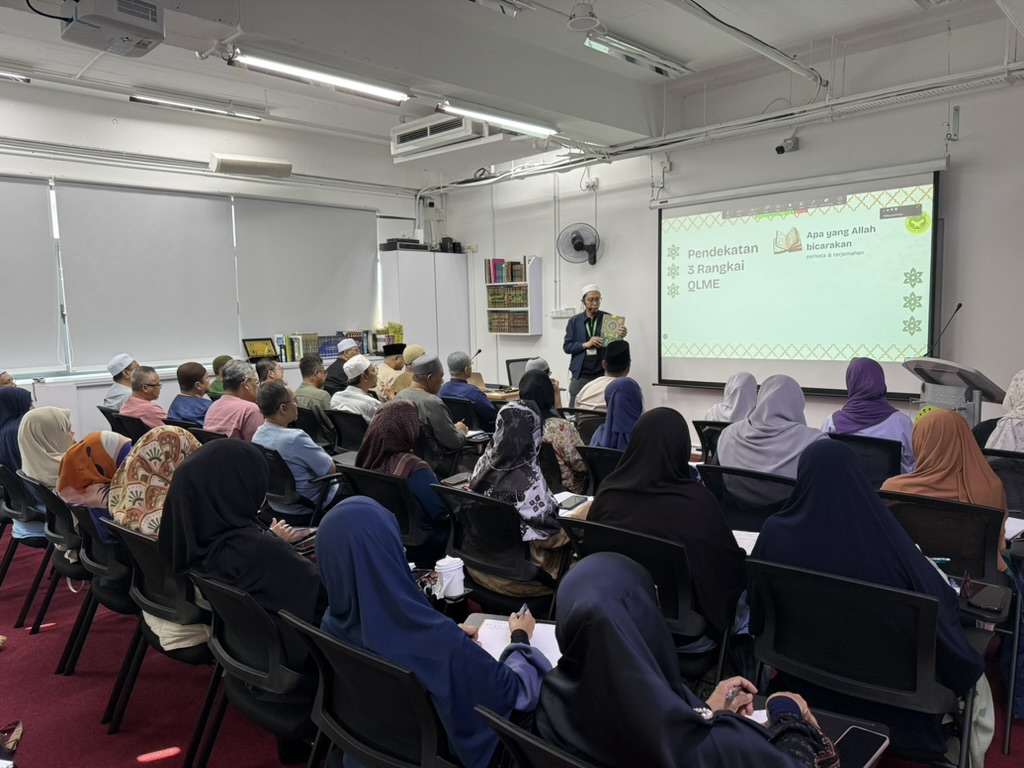
QLME 3.0 Batch 23 Begins: From Reading the Qur’an to Understanding Its Language
QLME 3.0 Batch 23 begins with a full house of physical and online learners, taking the next step from reading the Qur’an to understanding its language with sincerity and istiqamah.
Read More
QLME 3.0: The Evolution of Qur'anic Language Learning with Guided AI
A complete guide to QLME 3.0 — why Qur'anic language matters, how QLME evolved across three eras, what Guided AI really means, and the full learning framework from study to tadabbur to action.
Read More
Two Days, One Mission: Bringing People Closer to the Qur'an
AtTartil QI spent two days at Quran Festival 2026 at Masjid Sultan Singapore, meeting visitors from Africa, France, the United States, Indonesia, Malaysia, and Japan, and welcoming more than 50 participants to 'A Moment With Al‑Quran'.
Read More